Comprehensive Equine & Large Animal Care

A pet can have a healthy appetite, plenty of energy, and the same playful personality you see every day, yet still have a dental problem developing inside the mouth. That is one reason oral health can be easy to overlook. Dogs and cats often adapt to discomfort rather than showing an obvious reaction, so changes may be subtle until dental disease has progressed.
The mouth plays an important role in your pet’s everyday life. Eating, chewing, carrying toys, grooming, and interacting with the environment all depend on healthy teeth and gums. When oral disease begins to interfere with those activities, your pet may quietly adjust their routine rather than make the problem obvious.
For families in Canton, regular veterinary visits can provide an opportunity to monitor oral health and identify concerns that may not be apparent during a quick look at home.
A Closer Look at What Is Happening Inside Your Pet’s Mouth
Pet dental care involves much more than removing visible tartar or freshening your pet’s breath. Dental health includes the teeth, gums, tooth roots, and the structures that support them. Some of these areas cannot be properly evaluated just by looking at the part of the tooth you can see.
Plaque is often where dental problems begin. This sticky film contains bacteria and forms naturally on the teeth. If it is not removed, it can harden into tartar. As buildup remains along the gum line, inflammation can develop and contribute to periodontal disease.
What starts as a relatively small amount of plaque can therefore become a more significant oral health concern over time. Regular attention can help prevent dental issues from being overlooked until they begin affecting your pet’s comfort.
The Way Your Pet Eats Can Reveal a Problem
One of the most useful things you can do between veterinary visits is pay attention to your pet’s normal eating habits. You know how your pet usually approaches the food bowl, how quickly they eat, and which foods or treats they prefer. A change in that routine may be worth noticing.
A pet experiencing oral discomfort may chew differently, take longer to finish a meal, drop pieces of food, or become less interested in hard treats. Some pets may prefer softer food because it is easier to manage. These behaviors do not automatically mean dental disease is present, but they can provide useful information when something seems different.
The important point is not to wait for your pet to completely stop eating. A continued appetite does not necessarily mean every tooth and gum is healthy.
Bad Breath Is More Than an Unpleasant Habit
Pet breath is often dismissed as something that simply comes with having a dog or cat. However, persistent bad breath can be associated with plaque, tartar, gum inflammation, periodontal disease, or other oral concerns.
If your pet’s breath has become noticeably stronger, take a closer look at what else may have changed. You might notice tartar on the teeth, red gums, excessive drooling, or sensitivity around the mouth. Your pet may also be less willing to chew a favorite toy.
Bad breath alone cannot tell you what is causing the problem. Nevertheless, a persistent change gives you a reason to have your pet’s mouth evaluated rather than assuming it is normal.
Some Dental Problems Cannot Be Seen at Home
Looking at your pet’s teeth is helpful, but it has limitations. The visible portion of a tooth represents only part of the overall structure. According to the provided clinic information, approximately two-thirds of a pet’s teeth are located below the gum line.
That is where dental X-rays can become especially valuable. Radiographs allow the veterinary team to examine areas that cannot be adequately evaluated through a visual inspection alone. They may help identify problems involving tooth roots, abnormal or missing teeth, dead teeth, periodontal disease, cysts, tumors, and jaw fractures.
As a result, a tooth that looks relatively normal from the outside may still require further evaluation. Dental imaging gives your veterinarian additional information when determining the condition of your pet’s mouth.
Why Dental Disease Can Go Unnoticed for So Long
Pets have a natural ability to adjust their behavior when something feels uncomfortable. Rather than refusing every meal or crying out, they may simply change how they chew. They may stop carrying certain toys or become more selective about what they eat.
Those adjustments can become difficult to recognize because they may happen gradually. A small change today may become your pet’s normal routine a few weeks later.
That is why dental care should not depend entirely on obvious symptoms. Regular examinations give the veterinary team an opportunity to look for changes even when your pet continues to behave normally.
Professional Cleaning Goes Beyond What a Toothbrush Can Do
Brushing your pet’s teeth at home is a useful way to help manage plaque, but it cannot replace professional veterinary dental care. Once plaque hardens into tartar, it cannot simply be brushed away.
Professional cleaning allows the veterinary team to address areas that are difficult to reach at home. The provided clinic information states that professional dental cleanings include ultrasonic cleaning above and below the gum line, followed by polishing and fluoride treatment.
Cleaning below the gum line is particularly important because dental disease can develop in areas that cannot be fully seen or cleaned with a toothbrush. Depending on your pet’s oral condition, your veterinarian may also recommend dental radiographs to evaluate structures beneath the gums.
Home Care Still Has an Important Role
Professional treatment is only part of maintaining your pet’s oral health. What happens between veterinary visits matters, too.
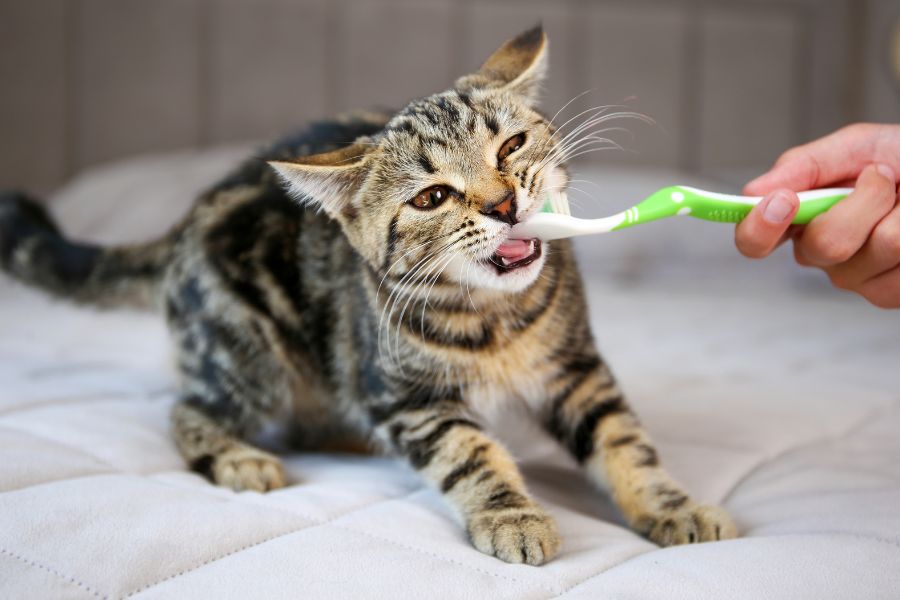
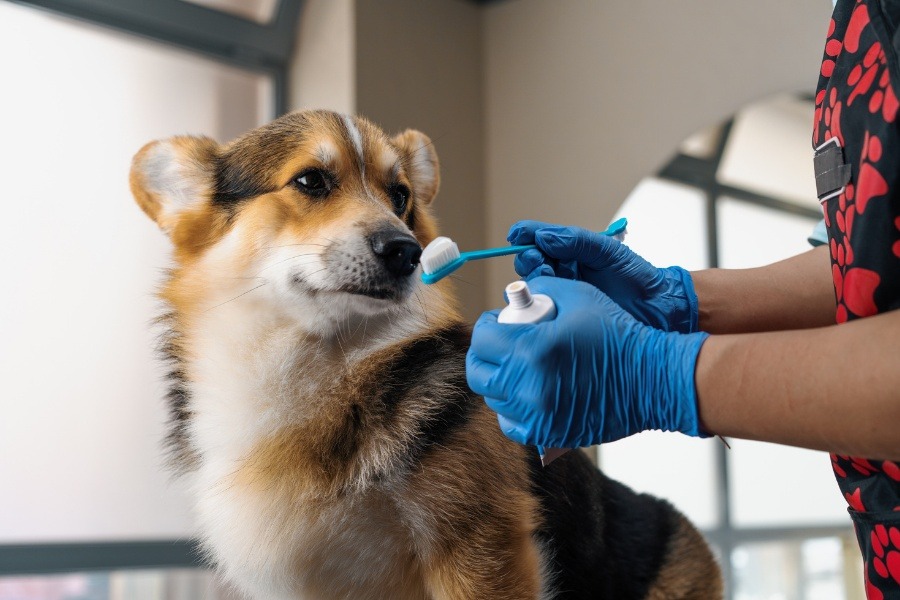
Regular tooth brushing can help reduce plaque before it has an opportunity to harden. If your pet is not accustomed to having their mouth handled, introduce brushing gradually. Short, calm sessions can help your pet become more comfortable with the process over time.
Use dental products specifically made for pets and follow your veterinarian’s recommendations. Human dental products should not automatically be used for animals because ingredients and formulations can differ.
The goal is not perfection. Establishing a routine that you and your pet can maintain consistently is more useful than attempting an elaborate dental routine that quickly becomes difficult to continue.
Watch for Changes in the Mouth and Behavior
There is no single symptom that confirms dental disease. Instead, several changes may indicate that your pet’s mouth deserves closer attention.
Watch for persistent bad breath, visible tartar, red or swollen gums, bleeding around the gums, loose or damaged teeth, excessive drooling, difficulty chewing, dropping food, reduced appetite, pawing at the mouth, facial swelling, or changes in normal behavior.
Some of these signs can also occur with other health problems. That is why they should be viewed as reasons to seek veterinary advice rather than as a diagnosis.
Even when none of these symptoms is present, routine dental examinations can still be worthwhile because some oral problems remain hidden.
Dental Care Should Not Begin With an Obvious Problem
It is understandable to focus on dental care once something looks wrong. However, waiting for severe symptoms can allow a problem to develop further before it is addressed.
Routine examinations take a more proactive approach. Your veterinarian can assess the condition of the teeth and gums, monitor changes over time, and determine whether professional cleaning or dental imaging may be appropriate.
The right schedule will not be identical for every pet. Age, breed, genetics, diet, previous dental history, and overall health can all influence oral health. Your veterinarian can help determine what makes sense for your individual pet.
Younger Pets Benefit From Good Habits, Too
Dental care is not something that needs to wait until a dog or cat becomes a senior.
Young pets can benefit from learning that mouth handling is a normal part of care. Gradually introducing tooth brushing can make it easier to maintain the habit as they grow. It also gives you an opportunity to become familiar with what your pet’s normal teeth and gums look like.
That familiarity can make future changes easier to recognize.
Senior pets, meanwhile, may require closer attention because years of plaque and tartar accumulation can contribute to dental disease. Their overall health may also influence how dental procedures are planned.
Dental care therefore belongs throughout your pet’s life rather than being reserved for a particular age.
Why Dental X-Rays Can Make a Difference
A visual examination provides valuable information, but it cannot show everything beneath the gums. Dental radiographs can give the veterinary team a better understanding of what is happening around the tooth roots and other hidden structures.
The provided information specifically notes that dental radiographs may help identify dead teeth, periodontal disease, abnormal teeth, missing teeth, cysts, tumors, and jaw fractures.
This additional information can be important when deciding how to approach a dental problem. Instead of relying only on what is visible, your veterinarian can use imaging when appropriate to develop a more complete assessment.
Think of Dental Health as Part of Everyday Comfort
Your pet’s mouth is involved in far more than eating. Dogs use their teeth to play and carry objects, while cats rely on their mouths for grooming and other everyday activities. Healthy teeth and gums help support these normal behaviors.
When oral disease causes discomfort, your pet may gradually change the way they interact with the things they enjoy. Those changes can be easy to miss because they often happen slowly.
That is why dental care should be considered part of your pet’s overall wellness rather than a cosmetic service. Regular examinations, appropriate professional cleanings, dental X-rays when recommended, and consistent home care can all contribute to better oral health.
A Small Change Is Worth Paying Attention To
You do not have to wait until your pet develops severe bad breath, stops eating, or shows obvious pain before asking about dental health. If something about the way your pet eats, chews, plays, or behaves has changed, bring it to your veterinarian’s attention.
At the same time, pets can have dental disease without showing noticeable changes at home. Routine veterinary examinations remain important because they provide an opportunity to evaluate areas that are difficult to assess on your own.
If your pet is due for a dental evaluation or you have noticed changes in their mouth, eating habits, or behavior, schedule your appointment with Spoon River Animal Clinic to discuss their dental health.
Frequently Asked Questions
Q1. Can my pet have dental disease even if they still eat normally?
Ans: Yes. Pets may continue eating while adapting the way they chew or choosing foods that are easier to manage. A normal appetite does not necessarily mean that the teeth and gums are free from disease.
Q2. What are some signs that my pet may have a dental problem?
Ans: Persistent bad breath, visible tartar, red or swollen gums, damaged or loose teeth, excessive drooling, difficulty chewing, dropping food, changes in appetite, pawing at the mouth, and behavioral changes can be possible signs. However, some dental problems may not produce obvious symptoms.
Q3. Can I keep my pet’s teeth healthy by brushing them at home?
Ans: Regular brushing can help control plaque and support ongoing oral hygiene. However, brushing cannot remove hardened tartar. Professional veterinary dental cleaning may be necessary when buildup has accumulated.
Q4. What dental services are available at Spoon River Animal Clinic?
Ans: The provided clinic information includes professional dental cleanings and dental radiographs among its dental services. Professional cleanings include ultrasonic cleaning, polishing, and fluoride treatment, while radiographs can help evaluate structures below the gum line.
Q5. Why might my pet need dental X-rays?
Ans: Dental X-rays can reveal areas that cannot be properly evaluated through a visual examination. They may help identify concerns involving tooth roots, abnormal or missing teeth, periodontal disease, dead teeth, cysts, tumors, and jaw fractures.
Q6. How can I know when my pet needs professional dental care?
Ans: Your veterinarian can assess your pet’s teeth and gums and recommend care based on their individual oral health. Persistent bad breath, visible tartar, chewing changes, damaged teeth, or other unusual signs are good reasons to request an evaluation. Routine wellness visits can also help identify dental concerns before they become obvious.